

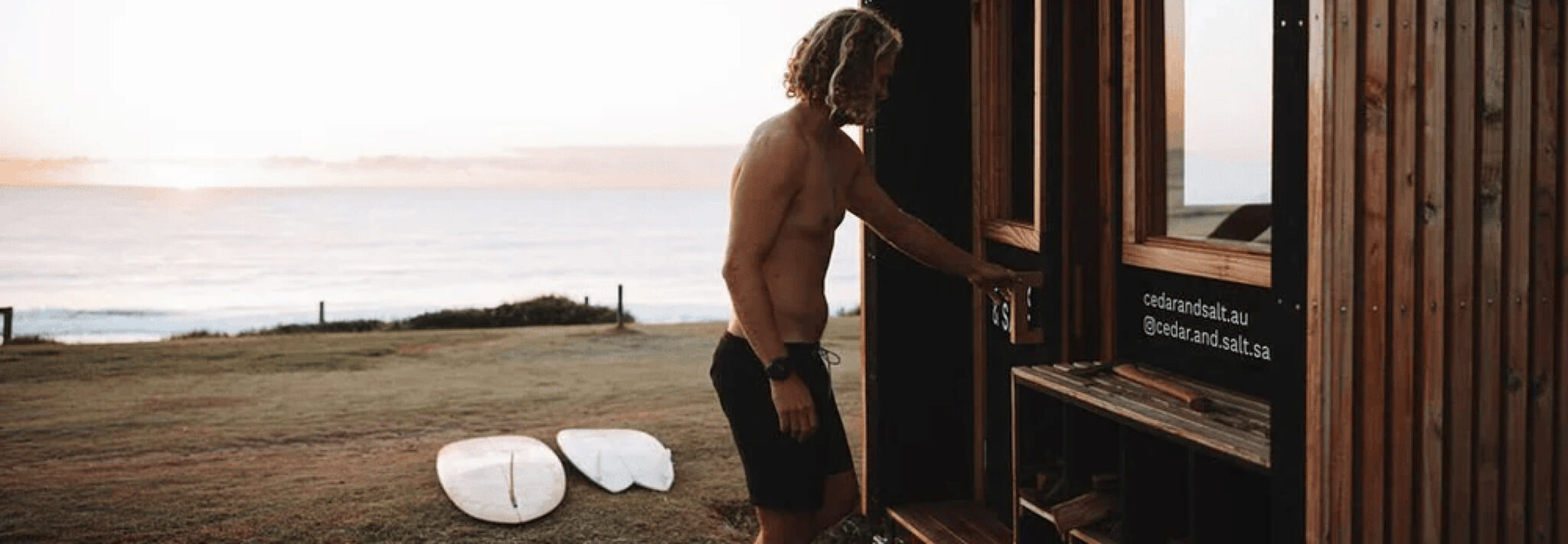
When Rob came back to Australia after a decade living overseas, he brought one thing with him that the country didn’t really have: a genuine love of sauna culture.
Not the performance-driven, lone-wolf version tucked into the corner of a gym change room. The Nordic version. Wood fire, cold water, open air, and a group of people genuinely in no rush to be anywhere else. That experience, the one that slows everything down and pulls people together, was what he wanted to bring to Sydney.
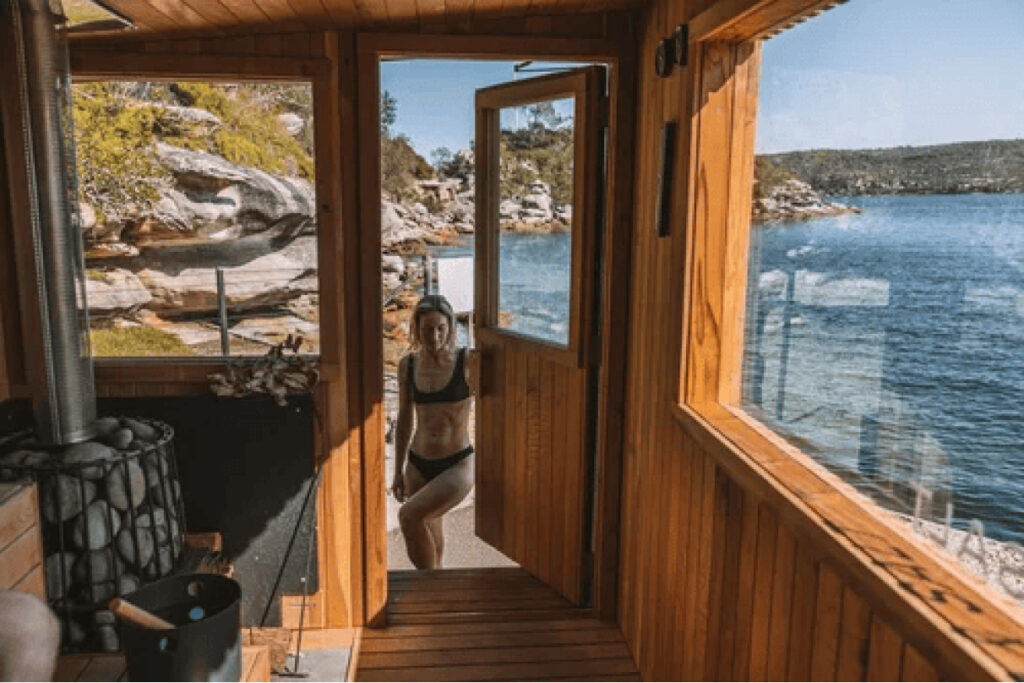
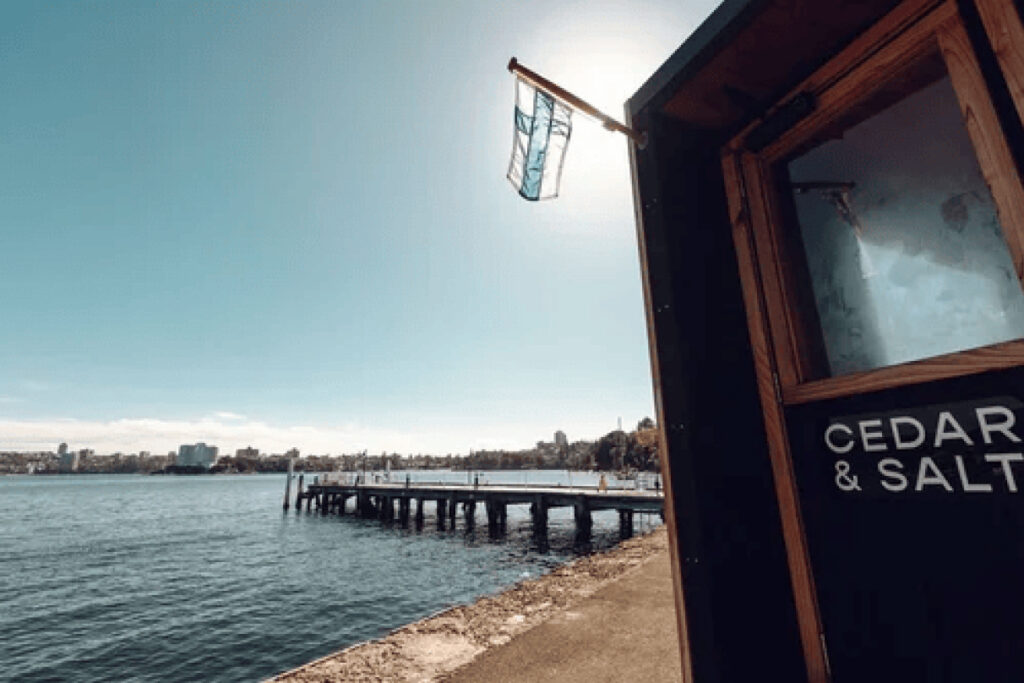
Cedar & Salt launched on Sydney’s Northern Beaches two years ago. A mobile, wood-fired sauna set up by the ocean. The response was immediate. What Rob didn’t quite see coming was who was showing up. “You think it would be a young, fit crowd in their early twenties,” he says. “But it’s completely the opposite.” His clients turned out to be predominantly middle-aged women, often booking with friends or family, drawn to the experience specifically because it wasn’t about performance. It was about connection.
A business built on bringing people together, though, needs to actually know who those people are.
The gap that Acuity couldn’t close
Cedar & Salt started out on Acuity Scheduling. For a business finding its feet through a single winter trading season, it did the job. Affordable, easy to set up, integrated with the website. But the model Rob had built was a group experience, and Acuity was built for individual bookings.
The problem became clear quickly. When someone booked a session and brought six friends along, Acuity captured the details of one person: the one who paid. The other six were invisible. No profiles, no waivers, no record of who had actually walked through the door.
“We were missing out on guests completing waivers,” Rob says. “We had no real visibility over who was actually using our facilities.”
For a business with real liability obligations, that was a problem that needed solving. For a business trying to build a loyal community, it was an even bigger one. Every person who came as a guest and left without a profile was a relationship Cedar & Salt couldn’t build on.
Rob spent time evaluating a lot of platforms. Most of them solved some of the problem. Mariana Tek solved the one that mattered most.
The feature that made the decision
The deciding factor was Mariana Tek’s Bring a Friend and Reserve Guest functionality. It meant that when someone purchased credits and brought friends along, every person in that group could be registered, waivered, and added to the Cedar & Salt database as a client in their own right.
“That was a big tick for me,” Rob says. “We get all that data. We can actually see who’s bringing friends and build from there.”
The first visit became the beginning of a relationship, not just a transaction. And the next time that guest decided to book on their own, everything was already there. Their profile, their preferences, their waiver. Ready to go.
The migration from Acuity was structured and well-supported. Onboarding emails, calls, and a clear process from start to go-live. When questions came up afterwards, the support chatbot resolved around 80% of them on the spot. “If you do need to speak to someone,” Rob says, “you can get that assistance within a few hours.”

Knowing the number that changes everything
The shift Rob hadn’t expected was what happened when he opened the reporting dashboard and started looking at his data properly for the first time.
Only 15% of Cedar & Salt customers were coming back for a second visit.
“That was a huge red flag,” he says. “But it was an eye-opening moment I needed.”
He’d sensed something wasn’t quite right with repeat bookings. But sensing a problem and seeing it clearly are very different things. With the number in front of him, Rob could act. He introduced unlimited memberships and intro offers to build a recurring base of regulars. He used client segmentation to target first-timers separately from lapsed customers, with marketing designed specifically for where they were in their relationship with Cedar & Salt. The goal was simple: turn one-time visitors into people who kept coming back.
It worked.
The repeat customer rate doubled, climbing from 15% to around 30%.
“I kind of knew there was a problem,” Rob says. “But I didn’t know the scale of it until I had that visibility through the Insights feature.”

A platform that moves with the business
What makes the Cedar & Salt story distinctive is the operating model. Unlike a fixed studio, Cedar & Salt is genuinely mobile. Locations shift. Seasons dictate trading windows. Council approvals shape what’s possible and when. The ability to toggle memberships and credit packages on and off isn’t a minor operational convenience. It’s what allows the business to keep moving.
“For a business like ours, that flexibility isn’t optional,” Rob says. “Being able to turn things on and off depending on where we’re trading makes a real difference.”
Cedar & Salt is still very much the outdoor, communal, nature-in-the-city experience Rob set out to create. The platform that runs behind it has simply made it possible to understand, grow, and keep building the community at the centre of it.
“It’s an investment, it might not be the cheapest platform,” Rob says. “But what you get for it is worth it. You’re getting proper reporting, you’re capturing everyone who comes through, not just the person who made the booking, and you can actually do something with it.”
Inspired by Cedar & Salt’s story? See how Mariana Tek supports boutique fitness and wellness businesses across Australia. Experience Mariana Tek
Article by Toni Rennie
First published: 01 July 2026
Last updated: 03 July 2026